
Label the starting sample
Assign a short reference to the physical sample or drawing, and photograph both sides beside its tray. An under-eye patch can have a symmetrical liner around an asymmetrical patch. A buyer who specifies only the outline may receive the correct footprint with the peel tab on the opposite end.
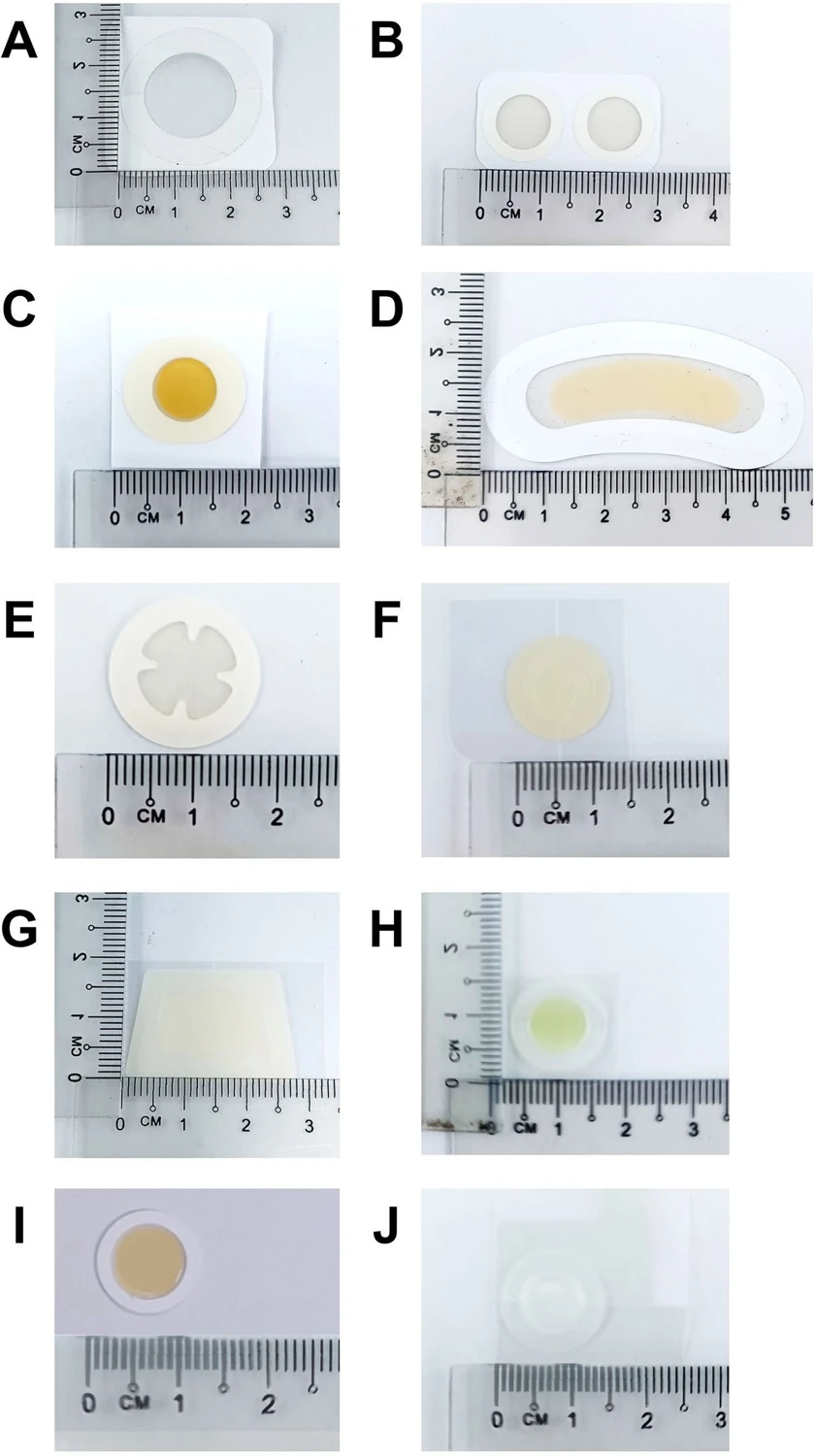
Image credits
Jing Yi Lee, Shi Hui Dong, Keng Wooi Ng and Choon Fu Goh · Image source · CC BY 4.0 · Original figure proportions and markings retained; converted to WebP.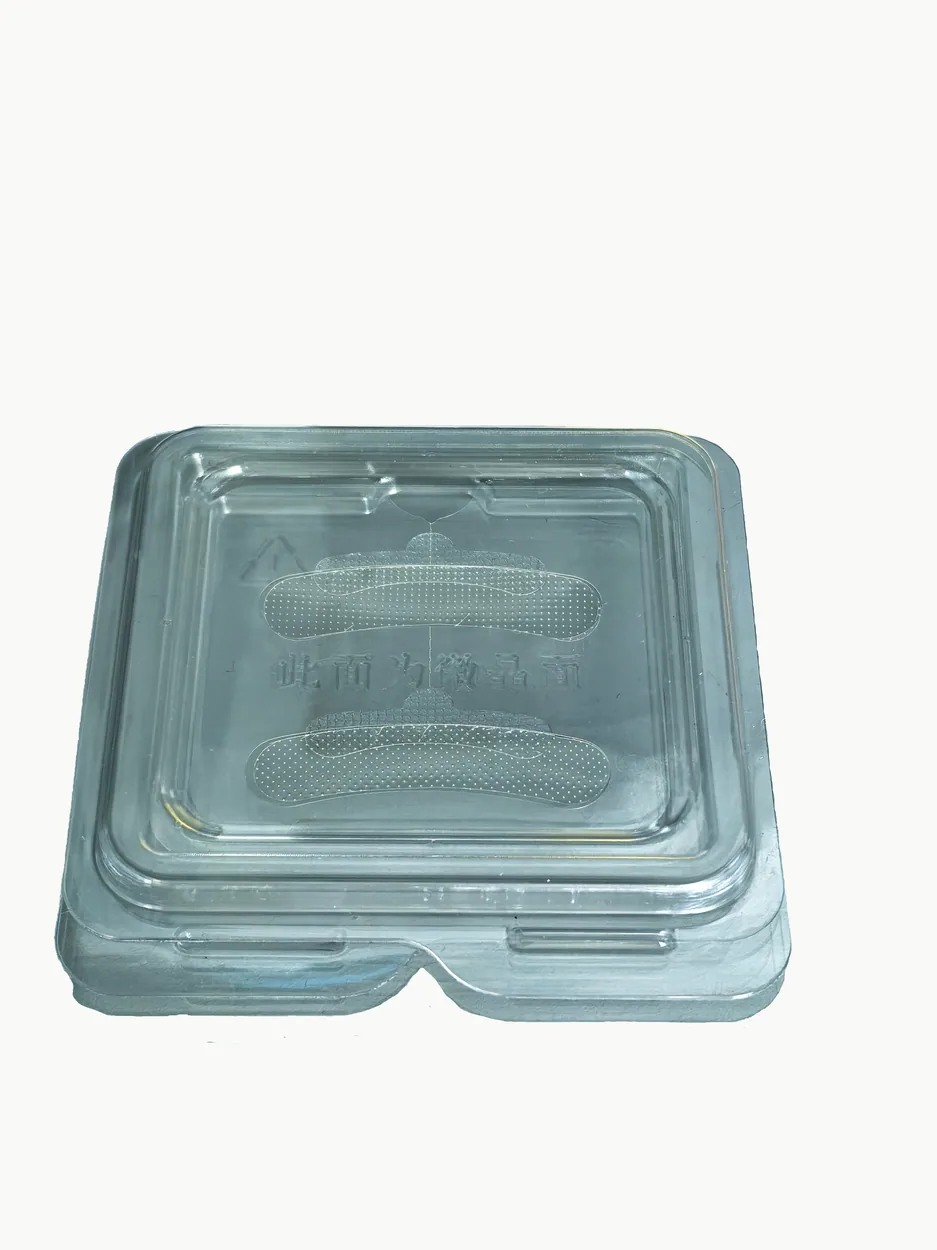
Image credits
Supplied photographSeparate fixed features from preferences
Name the features that the review must preserve. The carton size may be fixed by retail shelving while the pouch finish remains open. A crescent shape may be essential while the shade of the tray is a preference. This lets the supplier propose alternatives without reopening settled business decisions.
Write an answerable review question
A request such as ‘please match this’ leaves the sample maker guessing. Ask whether the approved pair fits the current tray without overlap, or whether the revised tab can be located when the pouch opens. State which team will assess the result and what they expect to receive.
Give each sample reviewer one decision
An artwork reviewer may need a printed carton, while a packaging buyer needs to open the actual pouch and lift the liner. Put the requested decision beside each sample recipient and say whether a mock-up will suffice. If the buyer wants to observe first-time opening, send the proposed instructions with the sample and keep a separate record of what the reviewer actually did. Arya and colleagues treated user feedback and observed performance as distinct questions in a placebo patch study.
Arya et al. (2017) · Usability and acceptability of a dissolving patch / Biomaterials
Prepare your inquiry
Send a reference plus a specific decision for the first sample.