
Ask what decision the sample must support
A prototype helps a team compare alternatives such as crescent outline, peel-tab position or the contrast of printed artwork. A pilot is useful once the team can name a target configuration and wants to see what happens when a sequence of units is made and packed. Define the question before asking for a quantity.
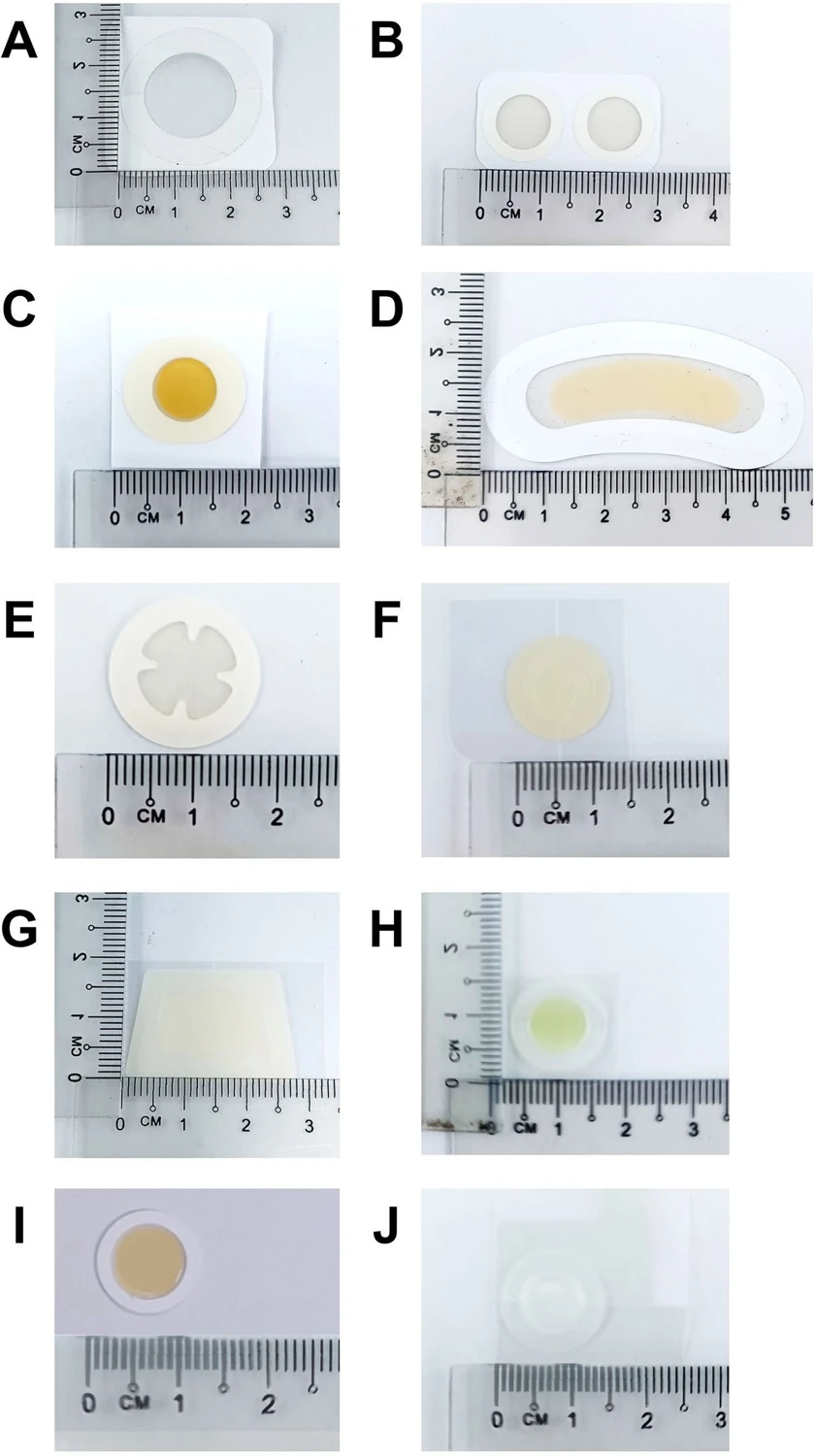
Image credits
Jing Yi Lee, Shi Hui Dong, Keng Wooi Ng and Choon Fu Goh · Image source · CC BY 4.0 · Original figure proportions and markings retained; converted to WebP.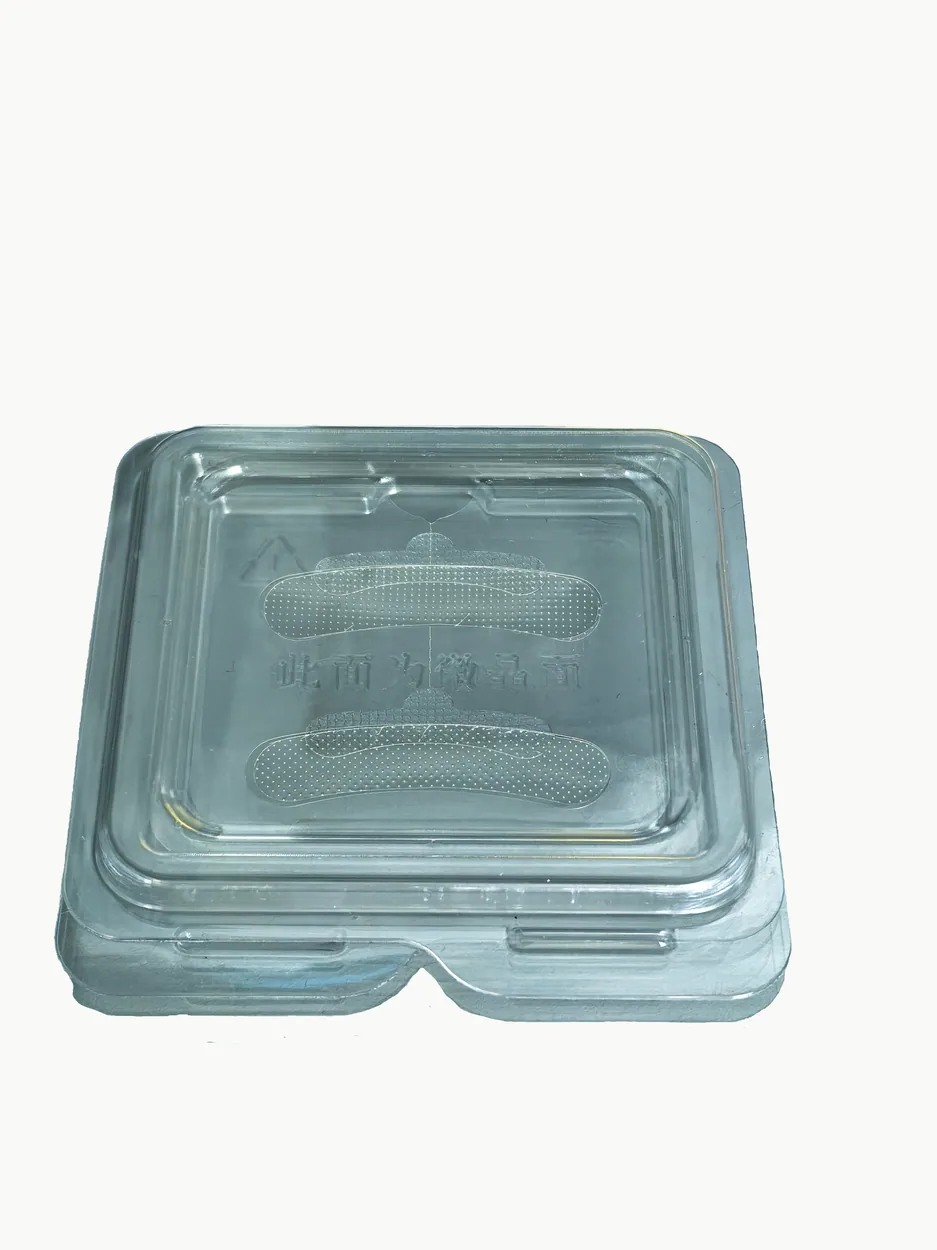
Image credits
Supplied photographMark the differences from the intended order
Record where the sample uses a plain pouch, a hand-loaded tray or a substitute backing. Those differences may be acceptable for one review and critical to another. For example, a plain pouch can help assess tray fit, while a print-registration review requires the intended artwork and substrate.
Decide whether another trial is needed
After the review, list the decisions settled and the questions still open. If the only change was artwork, the brand might request a print proof. A change to a tray cavity that touches the active patch area warrants a new fit check with the revised part.
Which parts of the prototype can carry forward?
Suppose a buyer approves a crescent shape presented on a rigid demonstration tray, then orders a pair in a flexible pouch. Keep the shape approval against its drawing. Mark the packed pair as a new review item, with separate questions about clearance, movement and opening. Anjani and colleagues evaluated a particular protective container with its test patch. Their comparison illustrates why an approval tied to one presentation needs an explicit boundary when the presentation changes.
Anjani et al. (2024) · The MAP-box storage study / Drug Delivery and Translational Research
Prepare your inquiry
Choose the trial size and format after naming the decision the sample must support.