
Match the patch to its immediate pack
Start with the patch side facing up, the protective cavity and the position of the release tab. Record the tray revision and how many patches fit in each tray. If one size is being replaced, put both revisions side by side and identify where the old and new outlines differ.
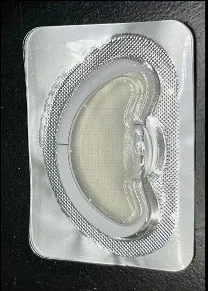
Image credits
Mengzhen Xing, Han Liu, Fanda Meng, Yuning Ma, Suohui Zhang, Yunhua Gao, Lianhua Fu, Junfeng Li, Muhammad Rizwan Younis, Changzhou Chen and Xiaohong Chen · Image source · CC BY 4.0 · Cropped to the original packaging photograph in panel A and converted to WebP.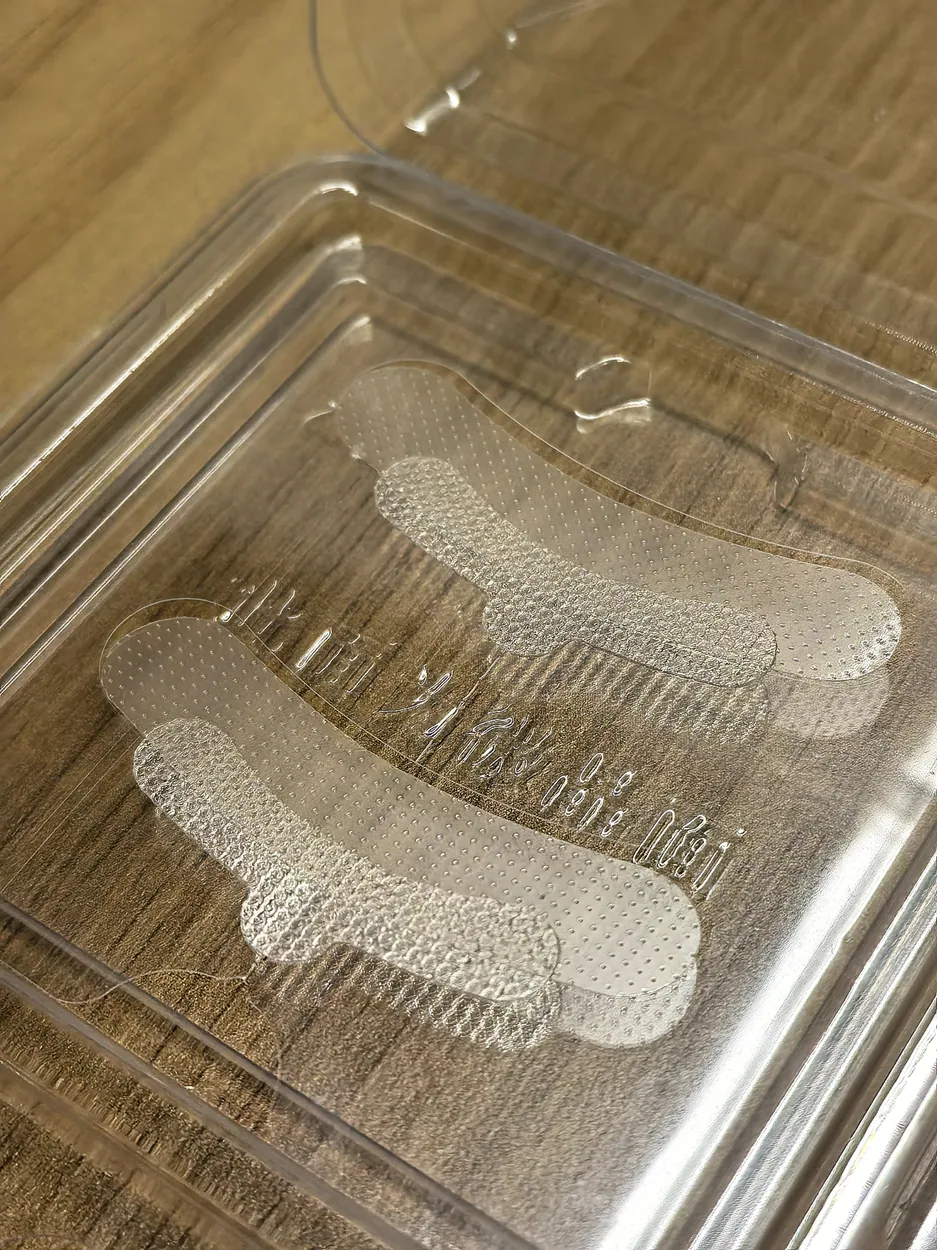
Image credits
Supplied photographCheck the unit a customer will open
Confirm how the pouch opens, which way the tray comes out and where the lot mark will appear once the outer carton is discarded. For mirrored eye pairs, photograph a correctly oriented sample. An image of the closed carton cannot settle an argument about left and right positions inside.
Issue one set of approved files
Bundle the pouch artwork, carton dieline, tray reference and packing instruction with revision dates. Mark translated copy, retailer barcodes and country variants against their correct pack. Ask the receiving team to acknowledge the exact version it will use for the pilot.
Make the approved pack recognisable without opening it
Put a finished-pack photograph beside the component list and mark which surfaces are visible to the receiving team. For an under-eye pair, a carton and foil pouch can look identical across different tray revisions. Ask where the revision code appears and how the receiving team can distinguish the two. A change in the protective component deserves its own review. Published work on the MAP-box tested an identified patch and container combination, illustrating the importance of specifying both.
Anjani et al. (2024) · The MAP-box storage study / Drug Delivery and Translational Research
Prepare your inquiry
A packaging handover joins the approved artwork to the physical pack beneath it.