
Write the decision before the run
Agree on inspection points, who will inspect and what constitutes acceptance. A practical buyer review may include orientation of an eye-patch pair, the visible condition of the needle area, opening of the pouch and correspondence between lot code and paperwork. The inspection method and any tolerance require agreement for the actual item.
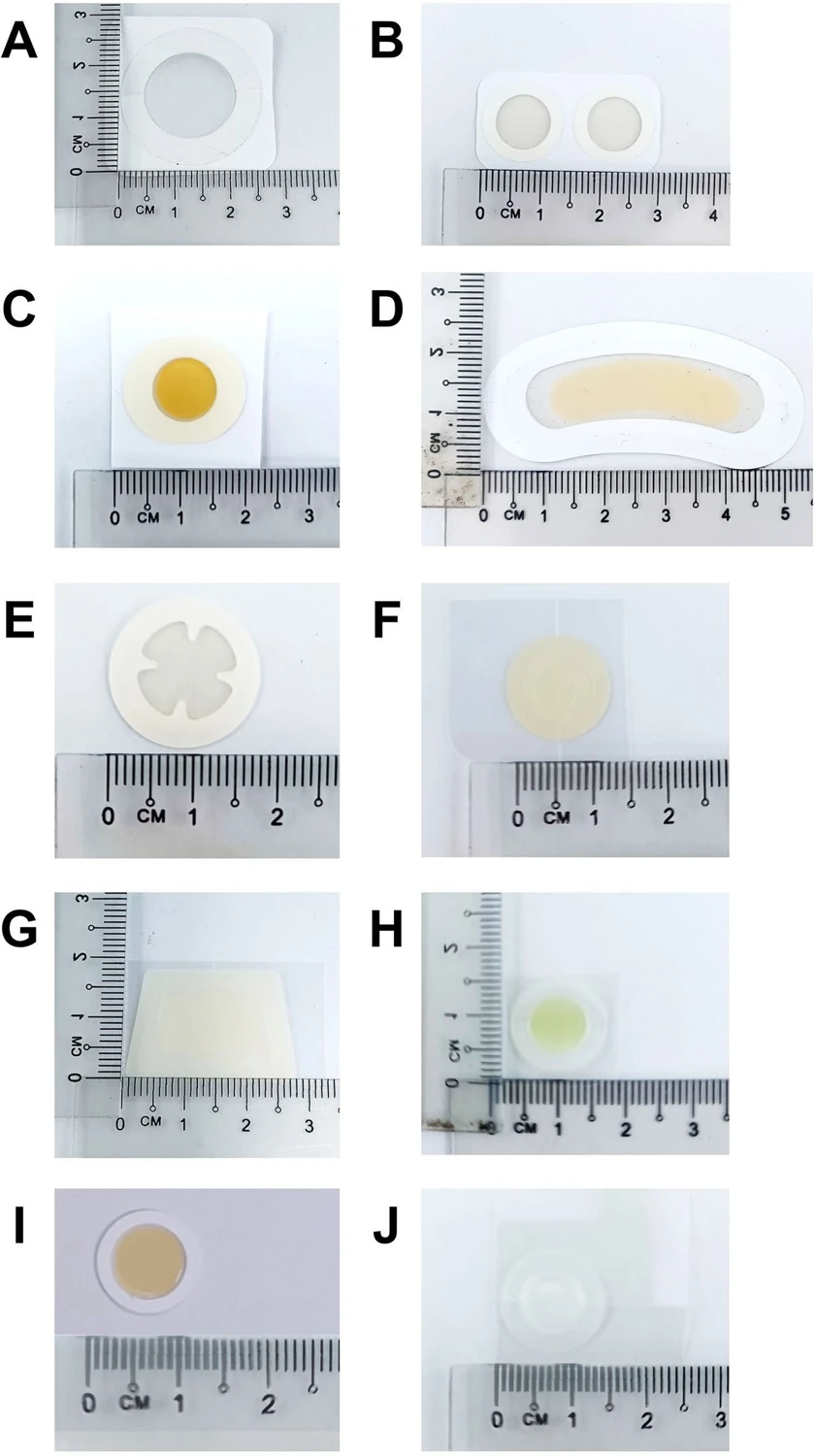
Image credits
Jing Yi Lee, Shi Hui Dong, Keng Wooi Ng and Choon Fu Goh · Image source · CC BY 4.0 · Original figure proportions and markings retained; converted to WebP.
Image credits
Supplied photographPreserve the evidence for exceptions
Give each observation a sample ID and an image that shows its position. A note saying ‘one patch damaged’ is difficult to reproduce. An image of the tray, patch side and corresponding pouch code allows a supplier to check whether the issue followed a component or appeared only at a packing step.
Make the release decision explicit
Use distinct decisions for accepted, held for additional review and revised sample requested. Record the quantity or lot covered and who signed off. If a supplier fixes a packing exception, retain the original finding alongside the replacement evidence so the team can see what changed.
Agree how a borderline observation will be resolved
Two reviewers can disagree when one measures a complete array and the other reports an estimated value for each feature. Before seeing pilot results, agree which report, units and sample identification will govern the purchase decision. Record who can resolve an unclear outcome and which unopened units remain available for review. Ando and colleagues showed that the measurement setup influenced mechanical results for their experimental patches. Their figures should stay attached to that setup when used as background reading.
Ando et al. (2024) · Factors affecting measured needle strength / Pharmaceutics
Prepare your inquiry
A usable acceptance record connects the decision to identifiable samples and agreed criteria.